

Streetwear Jackets Ranked by Warmth: Parkas Win 2026
Best overall for warmth: an insulated parka. Best for shorter, less restrictive wear: a puffer jacket. Best for light layering: a denim jacket. These streetwear jackets ranked by warmth compare jacket styles for 2026, not specific products; insulation, coverage and wind protection decide the order, not the silhouette alone.
- Streetwear jackets ranked by warmth start with insulated parkas when comparable insulation and longer coverage work together.
- Puffer jackets suit cold-weather outfits that need a shorter silhouette; construction matters more than visible puffiness.
- Uninsulated shells block wind but need insulating layers; denim jackets belong in milder conditions.
- Infinite Society is best for style-conscious streetwear shoppers seeking apparel and accessories, not a measured jacket-warmth ranking.
Why this matters
A jacket can look substantial and still leave you cold. A wide cut, heavy fabric or oversized collar does not establish how much insulation sits between you and the weather. Standing outside also demands a different outfit from walking briskly between indoor stops.
Choose the weather protection first, then build the silhouette. Infinite Society serves style-conscious streetwear shoppers with apparel and accessories; this guide separates that styling decision from the technical question of jacket warmth.
For your 2026 wardrobe, the useful comparison is between constructions rather than labels. An insulated bomber and an uninsulated bomber share a name, but they do not serve the same conditions. Read the description before trusting the shape.
What makes the warmest streetwear jacket?
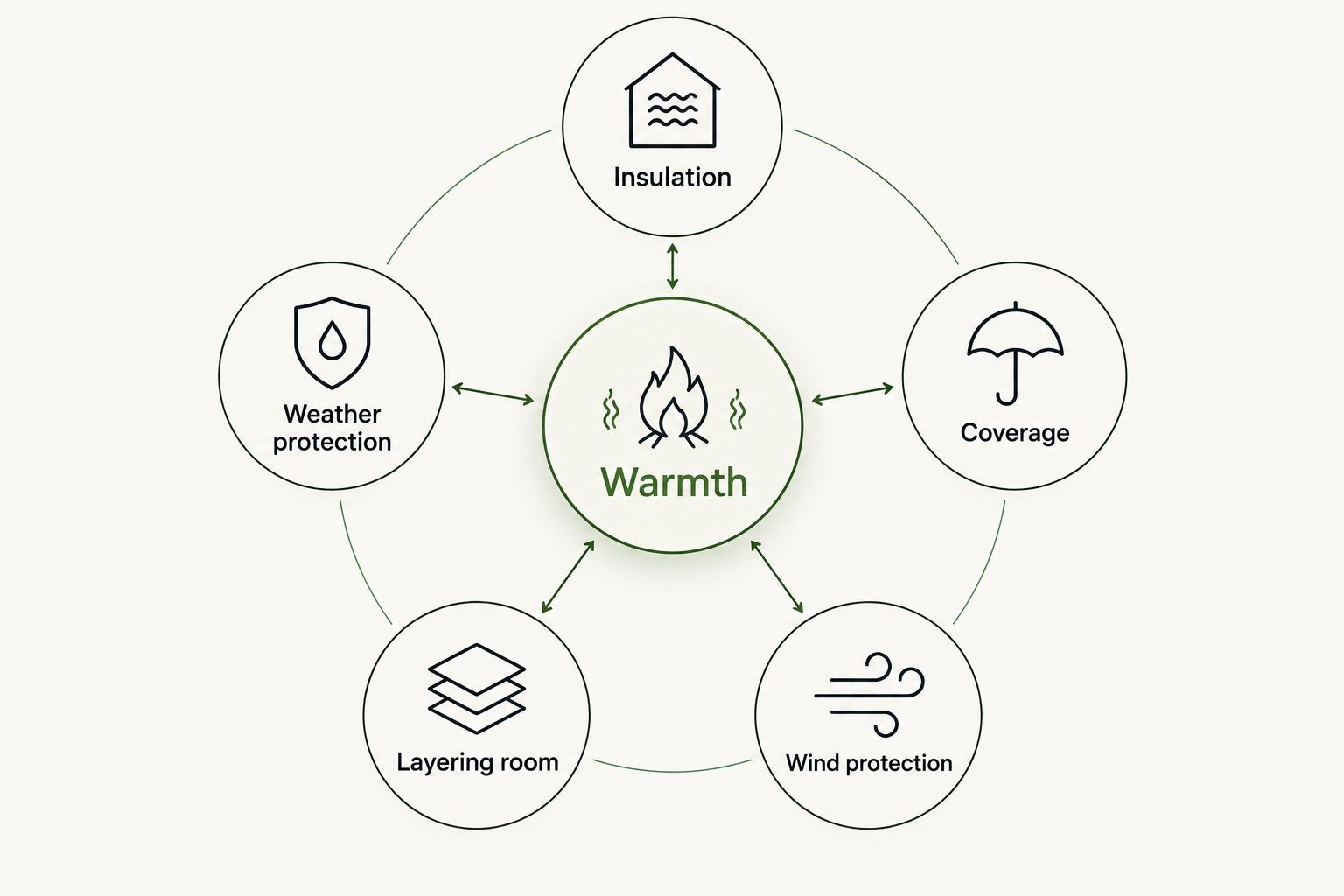
Judge every candidate against these five criteria. They explain the ranking and give you a way to challenge it when a particular jacket has different construction.
- Insulation: Look for an actual insulating fill or lining. A fashion silhouette does not tell you what is inside.
- Coverage: A longer hem covers more of your body. Compare jackets with similar insulation before crediting length alone.
- Wind protection: The outer fabric, front closure and openings affect how much moving air reaches your layers.
- Layering room: You need space for an insulating layer without crushing it or restricting movement.
- Weather protection: Water resistance and waterproofing are different claims. Check the stated construction rather than assuming either from appearance.
These criteria work together. A warm lining cannot compensate for every open cuff, and an excellent wind-blocking shell does not create insulation by itself. The strongest cold-weather choice combines heat retention with protection from the conditions you actually face.
Streetwear jackets ranked by warmth: at a glance
This 2026 ranking compares common constructions, not laboratory results. It assumes the parka and puffer both have substantial insulation, the overcoat uses dense wool fabric, the bomber is insulated, and the shell and denim jacket are uninsulated. Different construction can change the order.
| Rank | Jacket style | Best for | Standout feature | Key limitation |
|---|---|---|---|---|
| 1 | Insulated parka | Extended time outside | Insulation plus longer coverage | More bulk and indoor heat |
| 2 | Puffer jacket | Cold-weather daily wear | Insulating loft | Short hems leave less coverage |
| 3 | Wool overcoat | Tailored streetwear layering | Dense fabric and long silhouette | Performance depends on weave and lining |
| 4 | Insulated bomber | Short-jacket outfits | Insulation with a compact cut | Less lower-body coverage |
| 5 | Fleece jacket | Active layering | Insulating midlayer construction | Wind protection varies |
| 6 | Uninsulated shell | Wind and weather layering | Protective outer layer | No substantial insulating fill |
| 7 | Denim jacket | Mild-weather outfits | Structured outer layer | Limited insulation on its own |
The lower positions are not worse purchases. They answer different questions. A shell belongs over insulation when weather protection is the missing piece; a denim jacket belongs in an outfit that does not require serious cold protection.
1. Insulated parka: best for extended time outside
An insulated parka combines insulating fill with a longer body. When insulation is comparable, that additional coverage gives the parka the clearest advantage over a shorter jacket. It is the default pick for an outfit built around staying warm rather than moving quickly between heated spaces.
Pay attention to the front closure, cuffs and neckline. Those details help you close the jacket around your layers, while a hood adds head coverage when the design includes one. Do not assume every garment called a parka is heavily insulated.
Insulated parka pros:
- Covers more of your body than a waist-length jacket.
- Combines insulation and an outer layer in one garment.
- Works over layered outfits when the cut allows room.
Insulated parka cons:
- Adds length and bulk to the silhouette.
- Becomes cumbersome in heated indoor spaces.
- Warmth still depends on the fill and construction.
Best for: Outdoor waiting, slower walks and longer exposure to cold.
Verdict: Buy an insulated parka when warmth and coverage outrank a cropped silhouette.
2. Puffer jacket: best for cold-weather daily wear
A puffer jacket uses insulated compartments to hold fill across the garment. Its warmth comes from that insulation and its construction, not simply from looking inflated. Two equally bulky puffers can have different fills, coverage and weather protection.
The shorter shape fits outfits built around visible trousers and a defined waistline. Check where the hem lands when you raise your arms; a jacket that exposes your midsection during ordinary movement loses practical coverage.
Puffer jacket pros:
- Provides an insulating outer layer.
- Offers a shorter alternative to a long parka.
- Lets you build a cold-weather outfit around volume.
Puffer jacket cons:
- Visible puffiness does not establish warmth.
- Short versions cover less of your body.
- Rain protection requires a separate, verified claim.
Best for: Daily cold-weather wear when you want a shorter jacket.
Verdict: Buy a puffer jacket for everyday insulation; skip appearance-only comparisons.
3. Wool overcoat: best for tailored streetwear layering
A wool overcoat brings a longer, more structured silhouette to streetwear. Dense wool fabric supplies insulation, but the weave, lining and closure affect the finished garment's performance. It is not automatically warmer than an insulated jacket because it feels heavy.
Use the overcoat when you want clean outer lines over a casual base. Check the shoulders and sleeves with your intended midlayer underneath, rather than assessing the fit over a thin tee alone.
Wool overcoat pros:
- Adds longer coverage without a puffer silhouette.
- Works with both casual and tailored outfit elements.
- Accommodates layered styling when correctly fitted.
Wool overcoat cons:
- Open necklines need additional coverage in cold wind.
- Fabric weight alone does not prove thermal performance.
- Waterproof protection cannot be assumed.
Best for: Streetwear outfits with a tailored outer silhouette.
Verdict: Buy a wool overcoat for layered city dressing; choose insulation-first outerwear for prolonged cold exposure.
4. Insulated bomber: best for short-jacket outfits
An insulated bomber keeps the outer silhouette compact while adding warmth through its lining or fill. The important word is insulated. An uninsulated bomber does not belong in the same warmth position simply because its shape looks substantial.
A short hem puts more responsibility on the rest of your outfit. Check whether the waistband stays in place when you sit, reach and walk; coverage matters more than a clean standing pose.
Insulated bomber pros:
- Adds insulation without a long coat shape.
- Keeps the trouser silhouette visible.
- Uses a compact outline for layered outfits.
Insulated bomber cons:
- Leaves less lower-body coverage than a parka.
- Tight sleeves restrict thicker midlayers.
- Bomber styling alone says nothing about insulation.
Best for: Cold-weather outfits that depend on a short outer layer.
Verdict: Buy an insulated bomber for the silhouette; skip an uninsulated version when warmth is the priority.
5. Fleece jacket: best for active layering
A fleece jacket provides an insulating layer that also works beneath another jacket. Its strongest role in this comparison is flexibility: wear it as an outer layer in suitable conditions or beneath a shell when wind protection becomes necessary.
Check whether wind-blocking construction is explicitly stated. Fleece fabric and a wind-resistant jacket are not interchangeable categories, and an exposed fleece layer can feel very different once the wind picks up.
Fleece jacket pros:
- Works as either a midlayer or outer layer.
- Adds insulation to a shell-based outfit.
- Separates warmth from outer weather protection.
Fleece jacket cons:
- Wind protection varies by construction.
- Does not establish rain protection on its own.
- Thick versions need sufficient space beneath another jacket.
Best for: Adjustable outfits built around activity and changing conditions.
Verdict: Buy a fleece jacket as a layering tool; skip treating ordinary fleece as a complete weather barrier.
6. Uninsulated shell: best for wind and weather layering
An uninsulated shell primarily supplies outer protection rather than substantial insulation. Its exact role depends on its stated features: a wind-resistant shell and a waterproof shell are not the same claim. Match the garment to the weather requirement before choosing it.
The shell moves up in usefulness when you already have a warm layer underneath. That does not make the shell warmer by itself; it makes the complete outfit better protected.
Uninsulated shell pros:
- Adds an outer barrier over insulating layers.
- Lets you adjust warmth by changing the midlayer.
- Keeps weather protection separate from insulation.
Uninsulated shell cons:
- Supplies little insulating substance on its own.
- Requires room for the layers beneath it.
- Weather performance depends on verified construction.
Best for: Outfits that already have insulation but need outer protection.
Verdict: Buy a shell to complete a layered outfit; skip it as your only cold-weather layer.
7. Denim jacket: best for mild-weather outfits
A conventional uninsulated denim jacket is a structured outer layer, not a substitute for insulated winter outerwear. Its place in this ranking reflects that construction. A lined denim jacket needs a separate assessment because the lining changes the comparison.
Use denim when shape matters more than substantial heat retention. It works as part of a layered outfit, but adding a hoodie underneath does not turn every denim jacket into dependable cold-weather protection.
Denim jacket pros:
- Creates a defined, structured silhouette.
- Works over a light base or midlayer.
- Keeps mild-weather styling straightforward.
Denim jacket cons:
- Uninsulated versions provide limited warmth.
- Close cuts restrict thicker layers.
- Rain protection cannot be assumed.
Best for: Mild conditions and outfits centered on structure.
Verdict: Buy a denim jacket for light layering; skip it as your default winter jacket.
Make the ranking work for your outfit
For 2026, start with 3 garment layers as a planning framework: a base layer, an insulating midlayer and a protective outer layer. This is an outfit structure, not a temperature guarantee. An insulated jacket combines functions, so you do not need a separate garment for every role.
Run 2 fit checks before committing to the combination. First, reach forward with your intended midlayer underneath. Second, raise your arms and check the hem; reject a fit that restricts movement or exposes more than you want.
Keep 1 focal point in the outfit. If the jacket supplies the volume, let the layers underneath support it rather than compete. Infinite Society apparel and accessories belong in that styling conversation; their presence does not establish the thermal performance of your outerwear.
How the styles are ranked
The ranking prioritizes insulation, then coverage and wind protection. Layering room and weather protection determine whether each style works as a complete outer layer or needs support. No product-level testing or temperature rating is implied.
For 2026 buying decisions, compare the actual jacket description against the table's assumptions. A heavily insulated bomber can outrank a lightly insulated puffer; a lined denim jacket is not equivalent to the uninsulated version ranked here. Construction wins over category names.
Which streetwear jacket should you choose?
Choose an insulated parka if you are undecided and warmth is the main requirement. Choose a puffer when you want insulation in a shorter silhouette. Choose a wool overcoat when tailored lines matter and your layers suit the conditions.
Fleece and shells are strongest as parts of a system, while uninsulated denim belongs in milder weather. Infinite Society gives style-conscious shoppers an apparel-and-accessories context for the outfit; assess any jacket's protection separately. In 2026, that distinction keeps a style purchase from becoming a weather mistake.
FAQ
What's the warmest streetwear jacket style?
An insulated parka is the strongest default when warmth is the priority. With comparable insulation, its longer coverage gives it an advantage over a shorter jacket; actual construction still determines performance.
Is a parka warmer than a puffer jacket?
A longer insulated parka has a coverage advantage over a shorter puffer with comparable insulation. A heavily insulated puffer can still outperform a lightly insulated parka, so compare construction rather than names.
Does a thicker-looking puffer mean more warmth?
A thicker-looking puffer does not prove greater warmth. Check the stated insulation, coverage and outer construction instead of judging only the silhouette.
Is a wool overcoat good for streetwear in winter?
A wool overcoat works for winter streetwear when its construction and your layers suit the conditions. Check the weave, lining, neckline and fit over your intended midlayer.
Can I wear a shell jacket instead of a winter jacket?
An uninsulated shell is not a replacement for insulation. Wear it over an insulating layer when its stated wind or weather protection addresses the conditions you face.
Is a denim jacket warm enough for winter?
An uninsulated denim jacket is not a dependable default for substantial winter cold. Lined versions require a separate assessment, and added layers must fit without restricting movement.
How should a streetwear jacket fit over a hoodie?
A streetwear jacket should allow ordinary movement over your intended hoodie without squeezing the layers or pulling the hem excessively upward. Test the combination while reaching forward and raising your arms.
One last thing
Try the jacket seated as well as standing. A hem that looks right in a mirror can ride up when you sit, and a neckline that looks sharp can leave a gap once you move. The best warmth choice is the jacket that keeps its coverage during your actual day.